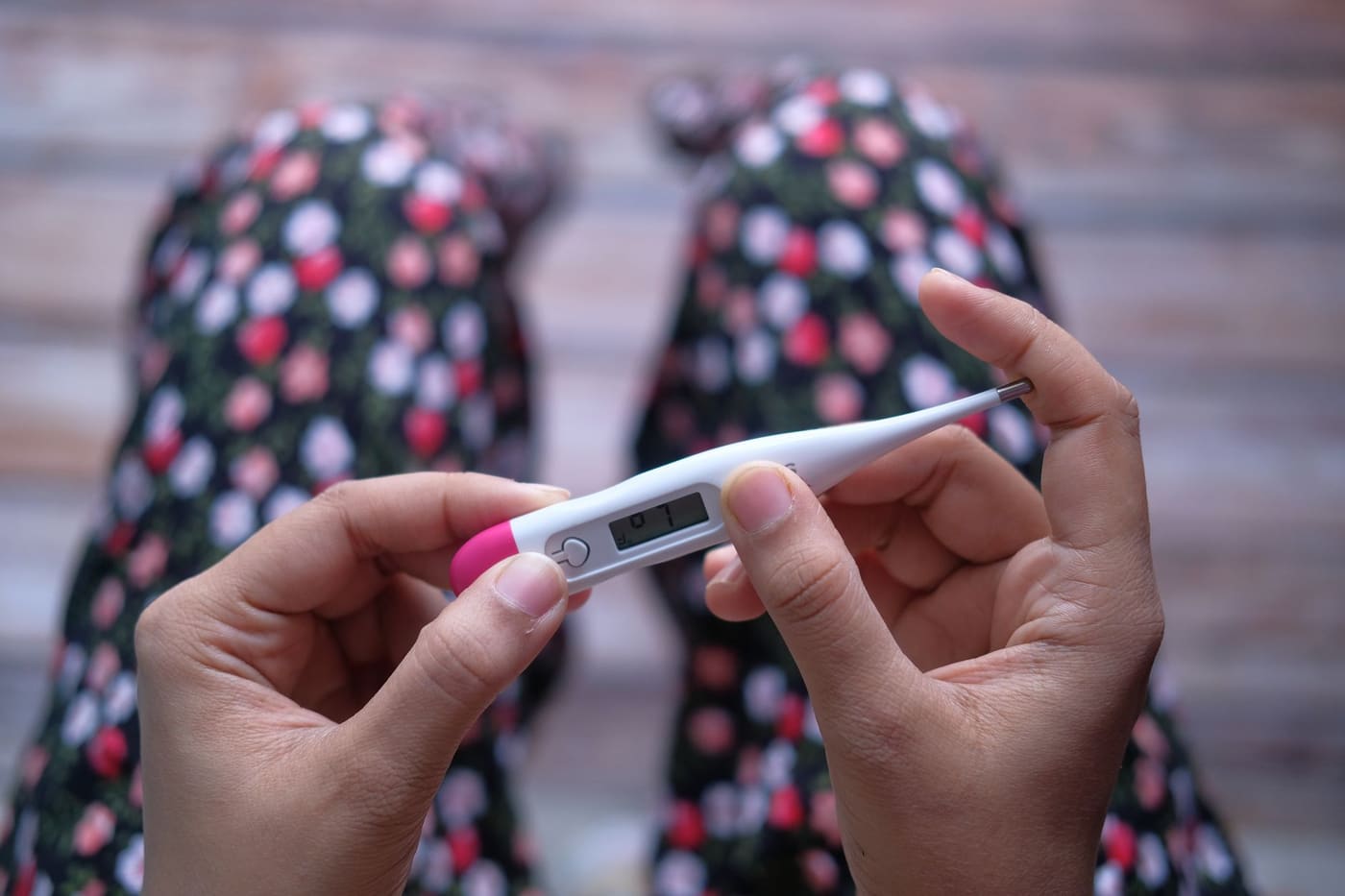
A fever is a temperature of 38C (100.4F) or higher, and the right response depends mostly on age. A baby under 3 months with a fever needs medical help straight away. Older children and adults can usually be looked after at home, but should get advice if the fever is not improving, lasts several days or comes with warning signs such as a stiff neck, a rash that does not fade, confusion or trouble breathing.
A fever is part of the body’s response to an infection, most often a cold or flu, and is usually not serious by itself. The number on the thermometer is a poor guide to how ill someone is. Age, how long it has lasted, how the person looks and behaves, and any other symptoms matter more. This guide follows the public guidance published by the NHS for adults and children, explains the age-based rules, and lists the red flags.
What counts as a fever
The NHS describes a high temperature, or fever, as 38C or above in both adults and children. A person can feel feverish, with chills, sweating or a warm chest and back, even when a thermometer reads a little under that, so how someone looks and feels counts as well as the reading.
Temperature also rises with exercise, hot weather and heavy clothing. If a reading seems surprising, rest for a while in a comfortable room and measure again.
Taking a temperature
For adults the NHS recommends a digital thermometer used under the tongue or in the armpit, and it advises against glass thermometers and some infrared or forehead-strip types because of safety or accuracy concerns. For babies and young children, follow the instructions that come with the thermometer and ask a pharmacist, nurse or health visitor to show you how to use it. Whichever method you use, tell the clinician which one it was, since methods give slightly different readings.
Fever in babies and children
Age sets the rules more than anything else. The NHS guidance for children says to get medical help as follows.
Call 111 (UK) or your doctor or nurse line straight away if:
- Your baby is under 3 months and has a temperature of 38C or higher
- Your baby is 3 to 6 months and has a temperature of 39C or higher
- The fever lasts 5 days or more
- A rash appears alongside the fever
- The child shows signs of dehydration
Outside the UK, call your pediatrician or local nurse advice line. Very young babies cannot show the signs of serious infection reliably, which is why any fever in the youngest group is treated seriously.
Call 999 (or your local emergency number) if the child:
- Has a stiff neck
- Has a rash that does not fade when a glass is pressed against it
- Is bothered by bright light
- Has a seizure for the first time
- Has cold hands and feet, mottled or discoloured skin, or trouble breathing
- Is unusually drowsy, floppy, agitated or hard to wake
Most childhood fevers pass within 1 to 4 days. A child who is playing and drinking is generally less worrying than one who is limp and hard to rouse, whatever the number says.
Fever in adults
For adults the NHS advice is less number-driven. Most fevers come from infections such as colds or flu and are not usually serious. Contact your doctor urgently (or call 111 in the UK) if the fever is not improving despite home care, or if it is getting worse. It is also sensible to get advice sooner if you have a weakened immune system, are pregnant, have a long-term heart, lung or kidney condition, or have recently had surgery or a hospital stay.
A fever together with a specific symptom is a reason to call as well, such as painful urination, a red area of skin that is spreading, chest pain or a cough that keeps getting worse. If a sore throat is the main complaint, the guide to what causes a sore throat most often explains which patterns need testing.
Red flags with any fever, at any age
Get emergency help (call your local emergency number) when a fever comes with:
- A stiff neck, severe headache or pain when looking at bright light
- Confusion, extreme drowsiness or difficulty waking
- Difficulty breathing or fast breathing
- A rash that does not fade under a pressed glass, or purple or dark spots
- Cold, pale, blue or mottled skin
- A seizure
- Severe pain in one area, a hot swollen joint or severe abdominal pain
- Persistent vomiting, or being unable to keep fluids down
Also seek prompt care for signs of dehydration, such as a very dry mouth, passing little or no urine, no tears when a child cries or, in a baby, a sunken soft spot on the head.
Home care that health services recommend
For otherwise well people with a mild fever, NHS guidance includes:
- Rest and stay home until the fever has gone.
- Drink plenty of fluids. Adults can aim for pale or light yellow urine. Keep breastfeeding or bottle feeding babies as usual.
- Do not overdress or pile on blankets. Dress lightly and keep the room comfortable.
- Do not undress or sponge a child down. A fever is the body’s natural defence and sponging is not advised.
- Check regularly, including through the night for a child.
- Use paracetamol or ibuprofen only for comfort, following the packet or the pharmacist’s advice. The medicine does not clear the infection, and a fever that drops after a dose does not rule out a serious cause.
Medicine safety rules from the same guidance
The NHS guidance for children says:
- Do not give aspirin to children under 16.
- Do not give paracetamol to babies under 2 months.
- Do not give ibuprofen to babies under 3 months or weighing under 5kg, to children with chickenpox, or to anyone who is dehydrated.
- Do not alternate paracetamol and ibuprofen unless a doctor or pharmacist advises it.
This article does not give doses. The right amount depends on age and weight, so use the label or ask a pharmacist, and watch for the same ingredient hiding in combined cold and flu products. For general advice on what to watch for after starting any medicine, see side effects to watch for with a new medication.
Fever with a cough or other lingering symptoms
A fever that arrives with a new cough is common with flu, COVID-19 and other respiratory infections, and the fever usually settles first. A cough that carries on after the fever has gone is common, and the guide to how to tell if a cough is lingering too long covers when it needs attention. A fever that goes away and then returns, particularly with worsening breathing or chest symptoms, should be checked by a clinician.
What to tell the clinician
Having these details ready speeds up the call or visit:
- The highest temperature, and how and when it was taken
- When the fever started and how it has changed
- Any medicine given, with the time of each dose
- Other symptoms such as rash, pain, cough, vomiting or urinary symptoms
- Recent travel, contact with sick people and vaccination status
- Existing conditions and regular medicines
Many health systems and insurers run a free nurse advice line, which is a good first call outside office hours when you are unsure how urgent something is. If you think a child is seriously unwell, trust that instinct and seek help without waiting for a threshold to be reached.
This article is general information, not medical advice. Talk to a qualified clinician about your own situation.
For the published emergency warning signs, see the emergency warning signs reference and symptom diary.
Where this comes from
This guide draws on the NHS guidance on high temperature (fever) in adults and in children, which gives the 38C definition, the age-based call thresholds, the emergency signs, home care steps and the medicine restrictions listed above. Local rules and services differ by country, and guidance is updated over time, so check the current advice from your own health service.