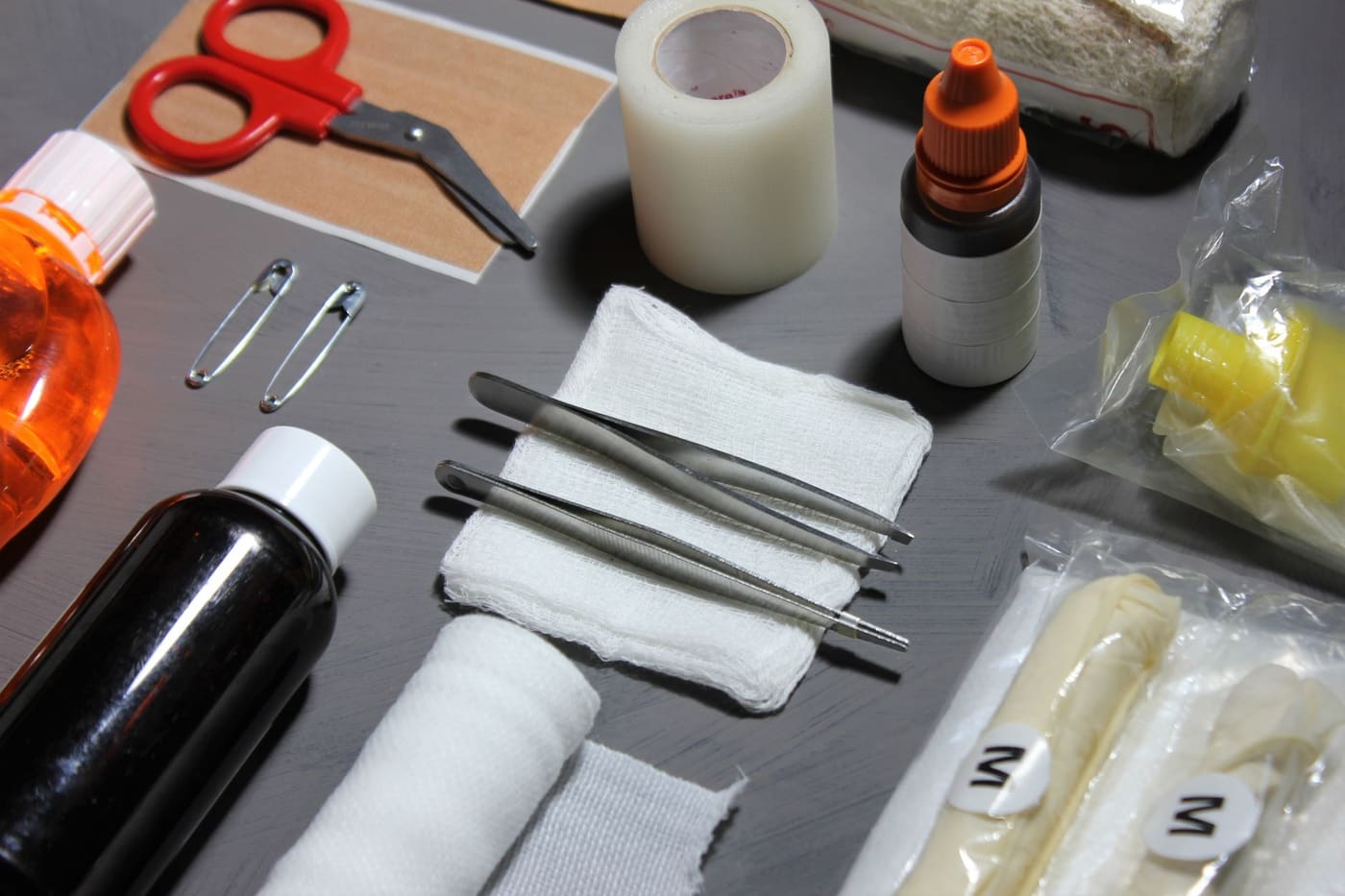
Every home should know how to cool a burn under running water for 20 minutes, stop bleeding with firm pressure, stop a nosebleed by leaning forward and pinching the nose, and call emergency services early for anything life-threatening. Add a stocked first aid kit and you cover most of the injuries likely to happen at home. This guide follows published NHS first aid pages and St John Ambulance CPR guidance, and says clearly where home care ends.
First aid is the care you give in the first minutes before a professional takes over, or the whole treatment for small problems that never need one. It is not about treating everything yourself. It is about doing a few things correctly and knowing when to stop and call for help. Written steps are no substitute for practice, so consider a hands-on first aid and CPR course from a recognised provider such as a national Red Cross society or St John Ambulance.
Start with a simple order of response
In any emergency, the same sequence helps you avoid becoming a second casualty.
- Check the scene. Make sure there is no continuing danger such as fire, traffic, live electrical wires or gas.
- Check the person. Are they awake and responding? Are they breathing normally?
- Call for help early. Use your local emergency number (911 in the United States, 999 or 112 in the UK). Put the phone on speaker so both hands are free and you can follow the call handler’s instructions.
- Treat the most serious problem first. Heavy bleeding and breathing problems come before everything else.
- Stay with the person and keep them calm until help arrives.
CPR when someone is not breathing normally
If a person is unresponsive and not breathing normally, call emergency services and start CPR. St John Ambulance describes the steps like this:
- Check for a response by gently shaking the shoulders and asking loudly if they are all right.
- Look, listen and feel for normal breathing for up to 10 seconds.
- Call emergency services, on speaker if you are alone.
- Kneel beside the person, put the heel of one hand on the middle of the chest, and put your other hand on top with arms straight.
- Push down about 5 to 6 centimetres (2 to 2.5 inches), at a rate of 100 to 120 compressions per minute, and let the chest rise fully between pushes.
- If you are trained and willing, give two rescue breaths after every 30 compressions. If you are not, keep going with continuous compressions.
- Continue until help arrives, the person starts to breathe normally, you are too tired to go on, or a defibrillator arrives. If someone else is there, swap every minute or two.
Gasping noises are not normal breathing. When a call handler gives instructions, follow them.
Cuts and grazes
Most household cuts are minor. The NHS steps for a minor cut or graze are:
- Wash your hands and, if you have them, put on disposable gloves.
- Stop the bleeding by pressing on the wound with a clean cloth or bandage. If it is bleeding heavily, raise the injured part above the level of the heart.
- Clean the wound by rinsing it with clean water or sterile wipes, then pat dry.
- Cover it with a sterile dressing or plaster, and keep it clean and dry.
Painkillers such as paracetamol or ibuprofen can be used for pain, following the packet. Never give aspirin to children under 16.
When a cut needs urgent help
The NHS advises calling 111 (or seeking same-day care) if a wound has soil in it or is still dirty after cleaning, if it is swollen, red, increasingly painful or oozing pus, if the cut is longer than about 5 centimetres (2 inches), or if you feel generally unwell or feverish.
Call emergency services or go to an emergency department if:
- The bleeding cannot be stopped
- An object is stuck in the wound
- There is numbness near the wound, or trouble moving the area
- The cut is on the face or palm, or is very deep
A clinician may close a wound with stitches, strips or glue, and may advise on tetanus protection. If you are unsure whether you are up to date, ask a doctor or pharmacist.
Burns and scalds
Burns are common in kitchens. The NHS says to act quickly:
- Cool the burn under cool running water for 20 minutes, ideally as soon as possible and within 3 hours. If there is no tap, use cool bottled water or a wet towel.
- Remove clothing or jewellery near the burn, but do not pull away anything stuck to the skin.
- Cover it by laying cling film over the burn. Do not wrap it around the limb.
- Take pain relief such as paracetamol or ibuprofen if needed.
Do not use oils, creams, butter or sticky dressings, and do not pop blisters, because these raise the risk of infection. Small burns usually heal in about 2 weeks.
Call emergency services or go to an emergency department for a burn that is large or deep, one on the face, genitals or buttocks, and any burn caused by acid, chemicals or electricity. If you are unsure how serious a burn is, call 111 or your local health advice line.
Nosebleeds
The NHS steps are simple:
- Sit down and lean forward, with the head tilted forward and the mouth open.
- Pinch the soft part of the nose, just above the nostrils, for 10 to 15 minutes while breathing through your mouth.
- For the next 24 hours, avoid blowing or picking the nose, hot drinks, alcohol, heavy lifting and lying flat.
Go to an emergency department if the bleeding lasts longer than 10 to 15 minutes, is very heavy, follows a head injury, makes you swallow and vomit a lot of blood, or leaves you weak, dizzy or short of breath. See a doctor if nosebleeds keep coming back, if a child under 2 has one, or if you take blood-thinning medicine.
Choking, allergic reactions and other emergencies
Choking and severe allergic reactions are emergencies where the exact technique matters and is best learned in a hands-on class, not from reading. The safe steps to remember are to call your local emergency number straight away, stay with the person and follow the call handler’s instructions.
Call emergency services for:
- Choking where the person cannot cough, speak or breathe
- Swelling of the lips, tongue or throat, or hives with trouble breathing, which can be signs of a severe allergic reaction
- Severe asthma that is not easing with a prescribed rescue inhaler
- Suspected poisoning (in the United States the Poison Help line is 1-800-222-1222, or call emergency services if the person is drowsy, having seizures or struggling to breathe). Do not try to make the person vomit.
People with a prescribed adrenaline (epinephrine) auto-injector should use it as their clinician taught them and still call for help.
Falls and head injuries
Do not move someone who may have a head, neck or back injury, for example after a fall from height, with severe neck or back pain, numbness or tingling, or loss of consciousness. Keep them still and call for help. After any knock to the head, if the person loses consciousness, has a seizure, vomits repeatedly, becomes confused or drowsy, or has a worsening headache, get emergency care. If you are unsure, get medical advice. For sprains and suspected broken bones, seek medical assessment if the person cannot bear weight, the limb looks misshapen, or the pain is severe.
What belongs in a home first aid kit
A ready-made kit is a sensible starting point and is inexpensive, and you can also build one. Keep it somewhere everyone knows, away from young children, and check it twice a year for used or out-of-date items. The contents below come from common sense and the steps above, not from a single official list.
- Plasters or adhesive bandages in several sizes, sterile gauze pads, tape and a non-stick dressing
- Disposable gloves, scissors and tweezers
- Clean water or sterile wipes for rinsing wounds
- A digital thermometer
- Cling film for burns
- Pain relief suitable for the household, with the labels kept legible
- A card with emergency numbers, regular medicines and allergies
Read labels and expiry dates on medicines, and see side effects to watch for with a new medication before adding anything new to the household routine. For fever in children, which has age-specific rules, see when to see a doctor for a fever.
Reduce the need for first aid
Many injuries are preventable. Common-sense steps include good lighting and clear walkways, working smoke alarms, safe storage of medicines, chemicals and sharp tools out of children’s reach, and gates for young children. Broader habits are in prevention habits that matter most for everyday health.
Call emergency services immediately for
- An unresponsive person, or no normal breathing
- Chest pain or pressure, especially with sweating, nausea or pain spreading to the arm or jaw
- Signs of a stroke, such as a drooping face, weak arm, slurred speech or sudden confusion
- Severe bleeding that does not stop with firm pressure
- Choking that cannot be cleared
- A first-time seizure or a seizure that does not stop
- Severe burns, a serious head, neck or back injury, or suspected poisoning
This article is general information, not medical advice. Talk to a qualified clinician about your own situation.
To stock a kit, use the home first aid kit checklist and emergency warning signs reference.
Where this comes from
The cut, burn, nosebleed and fever-related steps follow the NHS first aid and health pages for cuts and grazes, burns and scalds and nosebleeds. The CPR steps follow St John Ambulance’s published CPR guidance. The emergency-call lists and kit suggestions reflect standard first aid teaching and common sense. Local numbers, advice and training rules differ by country and change over time, so check them with your own health service or a recognised first aid provider.